
March 02, (THEWILL) — The United Kingdom and Germany have firmly ruled out joining the United States and Israel in offensive military operations against Iran, as tensions across the Middle East continue to escalate, following a wave of coordinated strikes and retaliatory attacks.
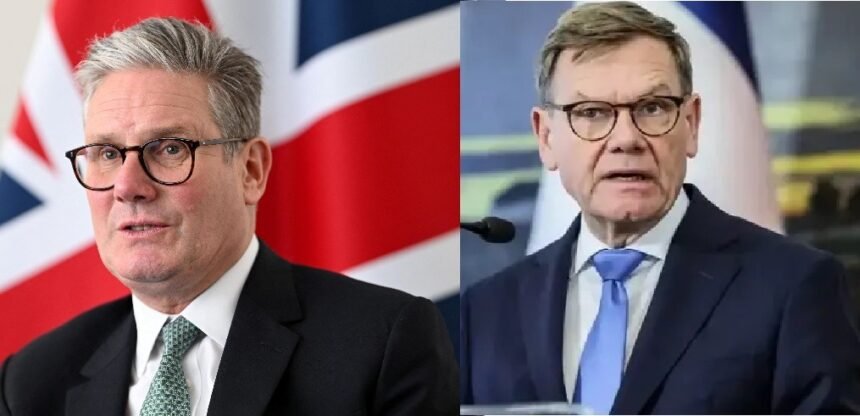
Prime Minister Keir Starmer said Britain would not participate in offensive action, stressing that while the UK had granted a US request to use its regional bases for a “specific and limited defensive purpose”, it was not involved in the initial strikes on Iranian targets.
“I want to be very clear: we all remember the mistakes of Iraq. And we have learned those lessons. We were not involved in the initial strikes on Iran, and we will not join offensive action now”, Starmer said in a video address.
His remarks came amid growing fears that the conflict could spiral into a wider regional war.
Britain’s Middle East Minister, Hamish Falconer, reinforced the government’s position, declaring that the UK is not at war.
“Let me be really clear: the UK is not at war”, Falconer said, noting that the government had taken a “deliberate decision” to avoid participating in the first round of attacks. However, he confirmed that Britain agreed to support defensive operations in response to what officials described as “reckless attacks from Iran”.
Foreign Secretary, Yvette Cooper, disclosed that a drone strike had targeted an airport runway and said the government was “working on every possible option” to support British nationals in affected countries.
According to Cooper, approximately 300,000 UK citizens live in Gulf states impacted by the rising hostilities. She urged nationals in the region to register with British authorities and comply strictly with local security guidance.
In Cyprus, President Nikos Christodoulides confirmed that a Shahed unmanned aerial vehicle crashed into military facilities at the British Bases in Akrotiri shortly after midnight, causing minor material damage. Despite the incident, British officials maintained that their military posture remains defensive and focused on safeguarding personnel and installations.
Meanwhile, Germany has also distanced itself from direct involvement in the offensive.
German Foreign Minister, Johann Wadephul, said Berlin had no intention of participating in US-Israeli military operations against Iran.
“The German Government has no intention of participating”, Wadephul said in a radio interview, adding that Germany does not possess comparable military infrastructure in the region and lacks the resources for such engagement.
“From the German perspective, there will be no further measures beyond that”, he stated, while noting that German troops stationed in Jordan and Iraq would defend themselves if attacked.
Wadephul acknowledged that there were “doubts” about whether the assault on Iran contravenes international law but described Iran as a significant threat to Israel, the broader Middle East, and Europe. He cited Tehran’s ballistic missile programme, alleged cyber activities, and its reported support for Russia’s war in Ukraine as major concerns.
The coordinated positions of London and Berlin underscore a cautious European approach, as leaders seek to balance alliance commitments with efforts to avoid deeper military entanglement in a rapidly intensifying conflict.