
With at least 10 major trade deals worth a minimum of $100 million currently being negotiated between African and Arab markets, the Federal Government has urged African countries to deepen intra-continental trade and investment as development aid to the continent continues to shrink.
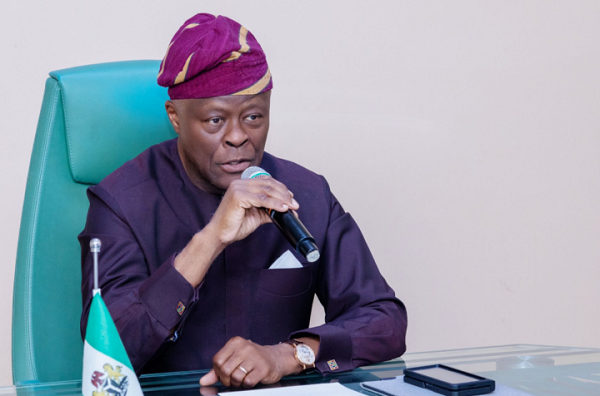
Minister of Finance and Coordinating Minister of the Economy, Mr. Wale Edun, made the appeal in Abuja on Thursday at the 5th B2B Agribusiness Matchmaking Event, warning that African economies must increasingly rely on regional markets and private capital to sustain growth.
Edun said recent trends showed a sharp retreat in global support to developing countries, stressing that concessional financing and overseas development assistance have continued to decline.
According to him, Africa recorded a nine per cent drop in 2024 and is projected to face a further 17 per cent decline in 2025, based on estimates by the African Development Bank.
He told participants that the shift in the global economic environment demands a new approach. “African countries are faced with high debt burdens in many cases, high debt servicing requirements that are gulping funds that could otherwise be used for public investment,” he said.
He added that it was clear during discussions that “the private sector is the real source of investment, whether it’s foreign direct investment or domestic investment.”
Edun noted that multilateral support structures built over decades are fading rapidly. “The world has turned away from multilateralism. If you take out maybe the willingness for international cooperation in perhaps the health sector in some cases and definitely in the area of climate, the multilateralism of the last decades since the Bretton Woods institutions rose up is fast receding,” he said
The Minister said the reality of declining aid flows requires African countries to look inward. According to him, “Concessional financing and even overseas development assistance flows to developing countries, to Africa, have turned negative.
“They were down by nine per cent last year 2024. By 2025, the flows will be down by perhaps 17 per cent, according to AFDB estimates. So, we have to look inward, we have to trade more with each other, we have to grow our economies together, the savings of our people being invested in productive activity.”
At the event, Founder and Chief Executive Officer of Welcome 2 Africa International, Bamidele Seun Awoola, confirmed that the organisation, working with its partners, aims to facilitate at least 10 trade agreements worth no less than $100 million between African and Arab markets.
Speaking at the matchmaking forum, Awoola said her organisation had set clear internal targets focused on unlocking new commercial linkages, spurring value addition and strengthening regional ties.
While declining to estimate the current size of Africa–Arab trade, she said the level of investor interest and ongoing engagements already pointed to opportunities that “far surpass the $100 million target.”
She said one of the organisation’s priorities is to drive industrialisation through joint ventures that bring manufacturers and processors into Nigeria.
According to her, Nigeria’s agricultural strength must be backed by processing capacity to create jobs, increase value addition and accelerate economic growth.
By linking producers with processors and structuring partnerships, she said her organisation hopes to help Nigeria build a stronger industrial base that supports communities and expands regional commerce.
Awoola noted that the matchmaking event was designed to generate concrete business outcomes. She said her team conducted detailed market analysis to determine what African countries, especially Nigeria, can competitively supply to the Arab market, and invited only participants positioned to close real transactions.
She expressed confidence that with the strong engagements recorded on the opening day, the event would produce partnerships, joint ventures and wealth-creating ventures aligned with Nigeria’s development goals.
A major outcome of the Abuja meetings was the signing of two Membership Agreements with Nigeria and Côte d’Ivoire. The agreement signed by the Federal Republic of Nigeria, represented by the Federal Ministry of Finance, formally admitted the country into the Arab Africa Trade Bridges (AATB) Programme.
The programme promotes trade facilitation, improves export competitiveness and targets key sectors including agribusiness value chains and small and medium enterprises. It also assists member nations in areas such as logistics, industrial development and expanding access to regional and global markets.